Pre-Removal Site Assessment
The walkthrough documents the removal area boundaries, access route for material haul-off, adjacent surfaces requiring protection, and any visible base condition issues that may affect the replacement installation plan.
Loading...
Service Detail
Removal of aging synthetic turf, separation of materials, and site prep for replacement.
Main Introduction
Turf removal and disposal in the Rosenberg and Fort Bend County market typically follows one of two scenarios: a property owner whose aging synthetic turf has reached end of useful life and needs full replacement, or a commercial client along the Hwy 59 corridor whose turf installation was damaged or is no longer appropriate for the current property configuration. Turf Installation of Rosenberg handles both scenarios with a removal scope that is coordinated with site prep for the replacement installation so the transition between removal and new turf is as efficient as possible.
Synthetic turf removal involves more than simply pulling up the surface. Infill material—sand, rubber, or cork—has to be separated from the turf backing and disposed of appropriately. In Fort Bend County, where properties near the Brazos Town Center area and established Rosenberg neighborhoods often have trees, plantings, and hardscape adjacent to the turf zone, removal has to be sequenced carefully to avoid damage to surrounding surfaces. The base material under the removed turf may also require assessment before a new installation begins: if base aggregate has shifted, compacted unevenly, or developed drainage problems during the life of the previous installation, that condition needs to be corrected before new turf is placed.
Commercial properties along the Hwy 90 and Hwy 36 corridors and retail centers near Riverpark Town Center occasionally need partial turf removal when a leased space is reconfigured or when a section of turf has failed while adjacent zones remain serviceable. Turf Installation of Rosenberg handles partial removal scopes with edge treatment planning that protects the remaining turf installation while the targeted section is removed and replaced.
What Is Included
Process Steps
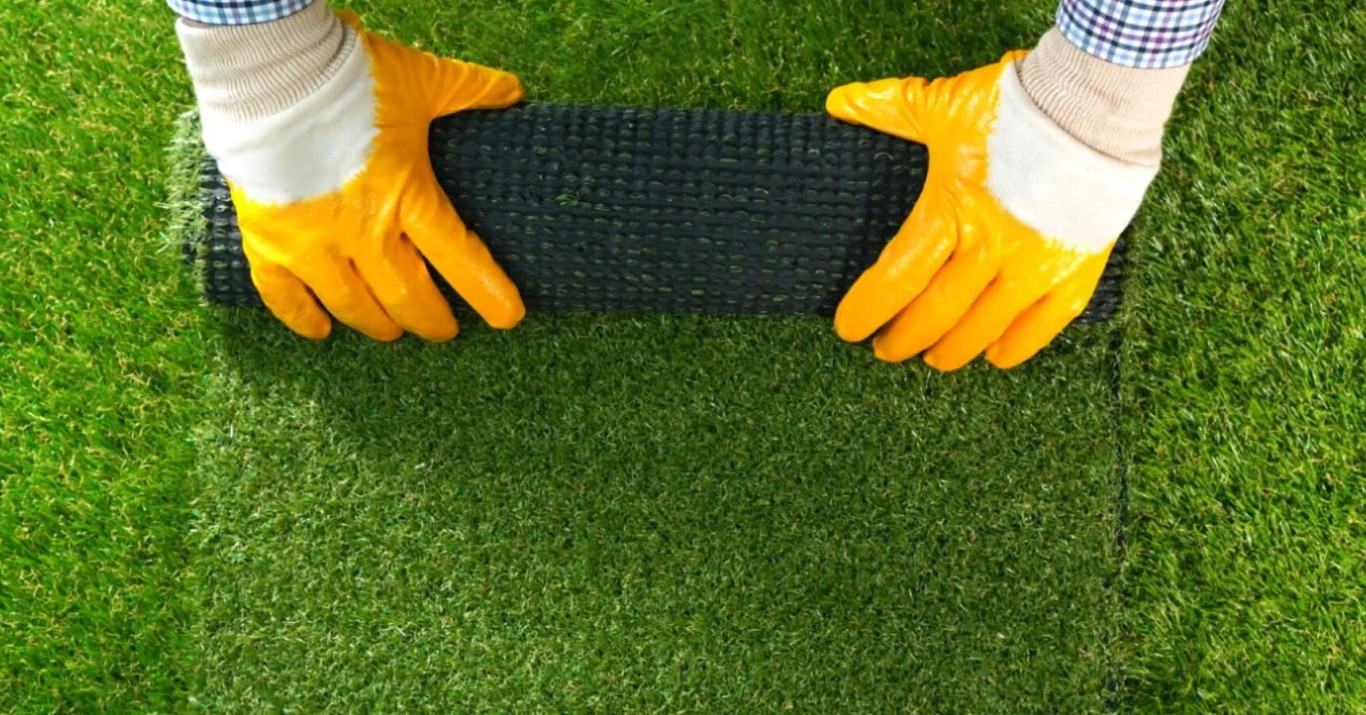
The walkthrough documents the removal area boundaries, access route for material haul-off, adjacent surfaces requiring protection, and any visible base condition issues that may affect the replacement installation plan.
Removal scope, disposal plan, adjacent surface protection approach, and coordination with any planned replacement installation are confirmed before work begins.
Turf sections are removed sequentially with attention to edge treatment at adjacent surfaces. Infill material is separated from the turf backing during removal for appropriate disposal or recycling.
After surface removal, base aggregate condition is assessed for compaction, drainage slope, and material stability. Issues identified at this stage are documented and discussed with the client before replacement installation begins.
Removed turf, separated infill, and debris are hauled off the property. If replacement installation is planned, base correction work is sequenced immediately after clearing so the site is ready for new turf placement.
If no replacement installation follows, site is left in cleared, documented condition. If replacement is planned, scope and sequencing for new installation are confirmed at this stage.
Use Cases
Rosenberg and Richmond homeowners whose residential turf has been in service for ten or more years and has reached a condition where repair is no longer practical. Full removal and replacement is planned as a single coordinated scope.
Commercial properties along the Hwy 59 and Hwy 36 corridors where tenant changes, lease reconfiguration, or property redevelopment require removal of existing turf from a section or the full installation.
Properties where one section of a larger turf installation has failed—due to drainage failure, vandalism, or severe wear—while adjacent zones remain serviceable. Partial removal scope protects the remaining installation.
Rosenberg and Richmond homeowners preparing a property for sale who need aged turf removed and the site returned to natural ground for buyer preference or real estate staging purposes.
Why Choose
Pricing Factors
Larger turf areas require more labor for surface removal, infill separation, and material haul-off. Commercial installations are typically larger than residential projects and affect scope accordingly.
Crumb rubber infill requires different disposal handling than sand or cork. Volume of infill to be separated and removed directly affects the removal scope labor and disposal cost.
Properties with limited equipment access, narrow gates, or shared haul-off routes require additional staging and sequencing for material movement.
Post-removal base assessment may identify compaction, drainage, or aggregate issues that need correction before replacement installation. This work is scoped after removal rather than assumed before.
Properties with extensive hardscape, wood decking, or sensitive plantings adjacent to the removal zone require more protective staging and careful removal sequencing.
Service Area
Related Services
Frequently Asked Questions
Yes. Removal and replacement are commonly coordinated as a single scope when Turf Installation of Rosenberg is handling both services. Coordination reduces scheduling gaps and site exposure time between removal completion and new turf installation.
Infill material—sand, crumb rubber, or cork—is separated from the turf backing during removal. Disposal approach depends on infill type. Crumb rubber requires appropriate disposal handling. Sand and cork are typically hauled to aggregate disposal facilities.
Yes. Base condition assessment after surface removal is included in the removal scope. This allows replacement installation decisions to be based on actual post-removal base condition rather than assumptions made before the old turf is pulled.
Yes. Partial removal scopes are planned with edge protection for the adjacent remaining turf. This allows a specific failed section to be replaced without disturbing surrounding installation zones that are still in good condition.
Most residential turf removal projects in Rosenberg and Fort Bend County take one to two days depending on area size, infill volume, and access conditions. Timeline is confirmed during the pre-removal site assessment.
Submit the contact form with your property address, approximate area of turf to be removed, and any notes about access constraints or adjacent surfaces that need protection. A follow-up will be arranged to confirm scope and schedule the pre-removal walkthrough.
Contact
Send your project details to schedule a scope review and next-step planning call.
Call