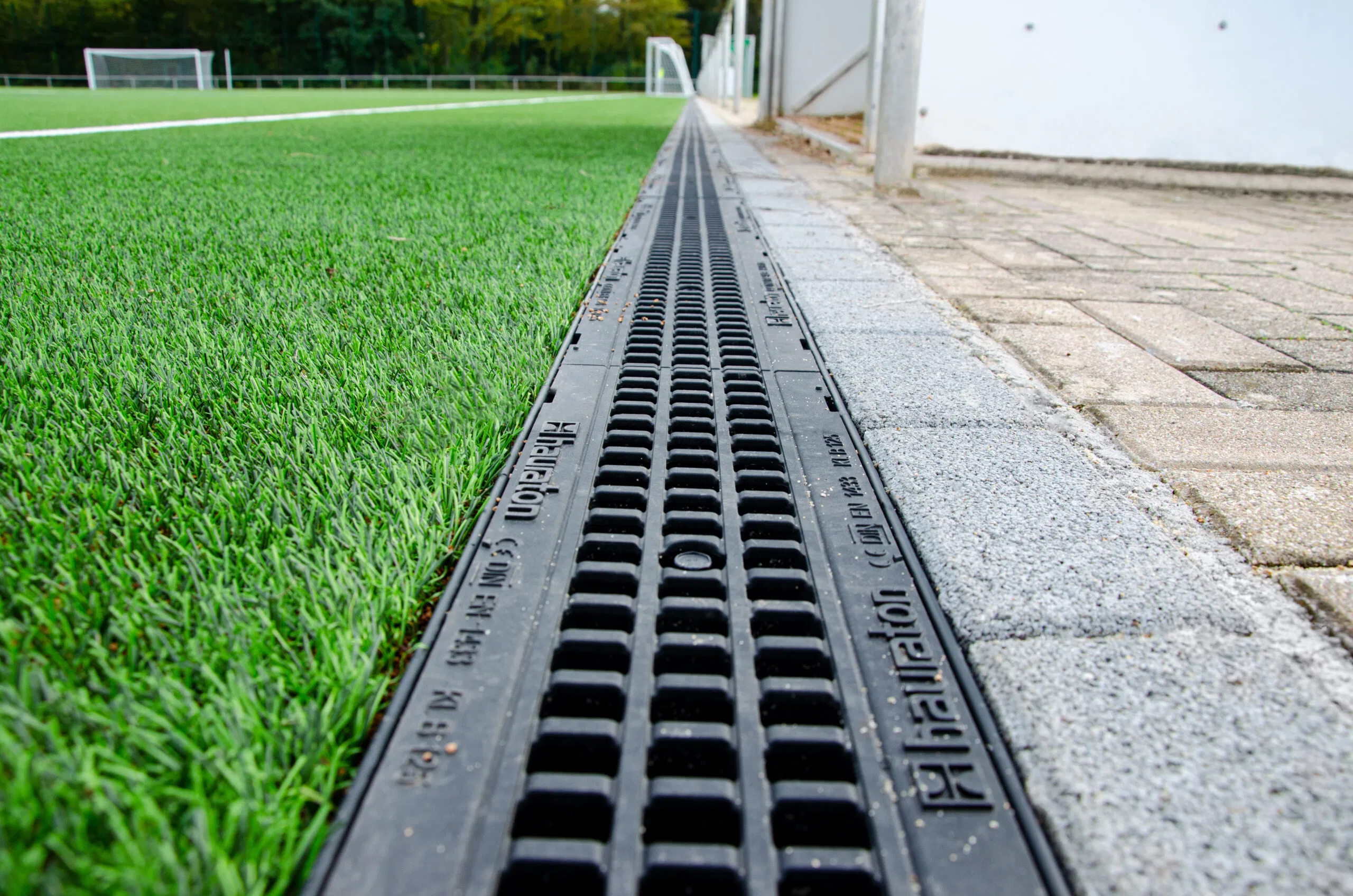
Drainage system installation for synthetic turf in Rosenberg and Fort Bend County is not an add-on—it's a foundation requirement for most properties in this area. Fort Bend County's clay-heavy expansive subsoil is one of the most challenging drainage environments for turf installation in the Gulf Coast region. Clay soil holds moisture rather than releasing it, swells during wet seasons, and can shift base aggregate material in ways that disrupt drainage slope established at installation. Properties near established Rosenberg neighborhoods, low-lying Richmond sections, and the collector streets running parallel to the Hwy 59 corridor frequently deal with pooling that follows every significant rain event. Ignoring that behavior before turf installation means building a turf system on top of a drainage failure.
Turf Installation of Rosenberg approaches drainage planning as a pre-installation requirement rather than an afterthought. The site walkthrough documents grade transitions across the full installation area, identifies low zones and drainage paths, evaluates soil percolation behavior, and flags any existing drainage infrastructure—French drains, catch basins, channel edges—that affects how water moves through the property. That documentation drives the drainage system design before base aggregate is ordered or installation is scheduled.
Drainage system options for synthetic turf range from simple slope correction and base aggregate optimization in properties with mild drainage issues, to French drain or perforated pipe systems integrated beneath the turf base for properties with persistent low-zone pooling. Commercial properties along the Hwy 36 and Riverpark Town Center corridors, where parking lot drainage patterns cross into landscaped zones, may require inlet connections or channel drain integration alongside the turf scope. Turf Installation of Rosenberg designs drainage systems scaled to the actual drainage challenge at each specific address.