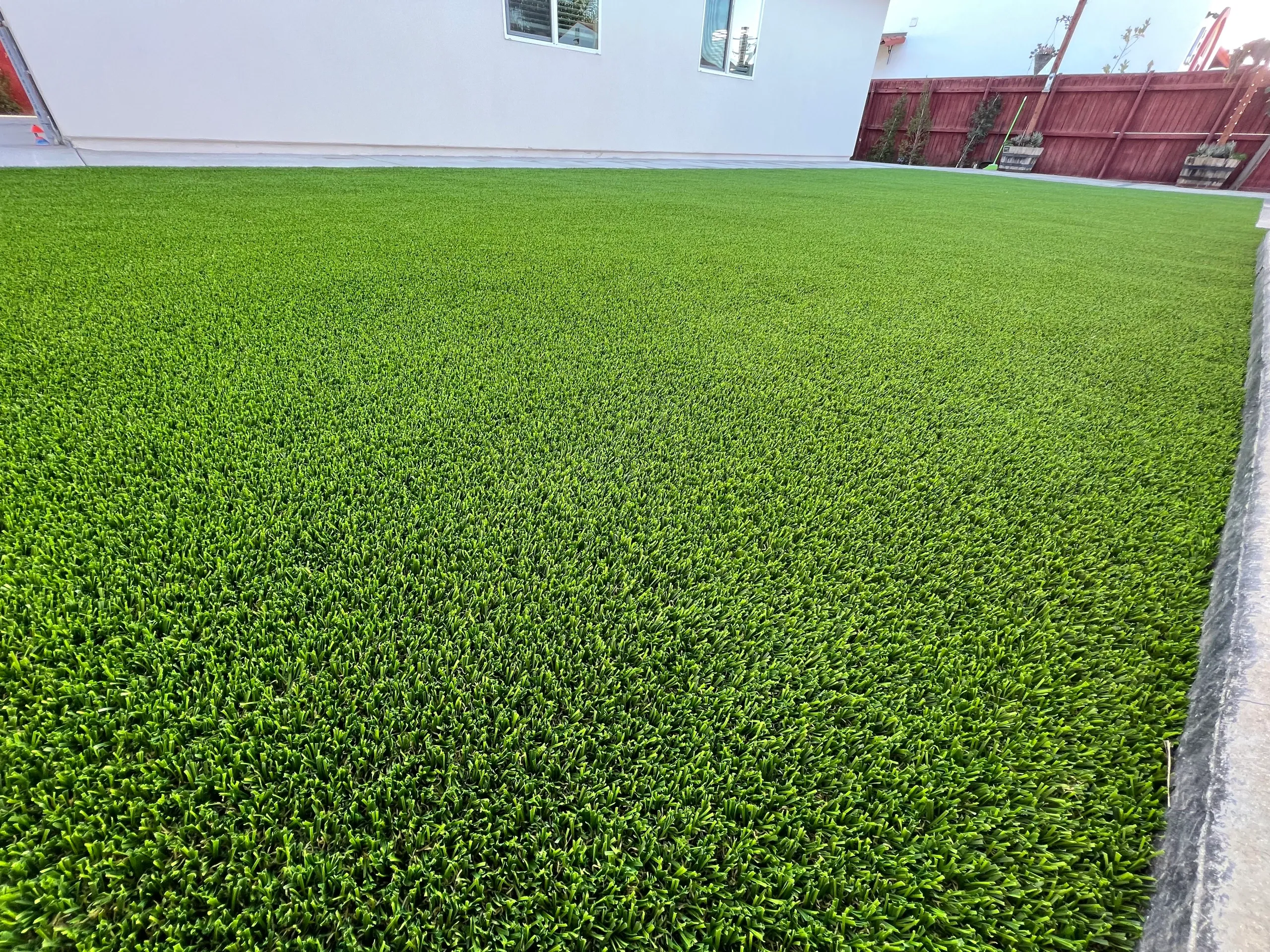
Turf infill replenishment is one of the most commonly deferred maintenance tasks for synthetic turf owners in Rosenberg and the surrounding Fort Bend County communities. Infill—the granular material distributed between turf blades—is what gives a synthetic surface its cushion, its drainage rate, and its blade support. As infill migrates under traffic, washes toward drainage edges during rain events, or compacts over time, the surface performance changes in ways that are gradual enough to go unnoticed until a zone fails visibly or drainage becomes problematic. Turf Installation of Rosenberg assesses infill levels as part of every maintenance visit and provides infill replenishment as a standalone service for properties that need restoration without full surface replacement.
In Fort Bend County's climate—hot humid summers, periodic heavy spring rains, and clay-heavy subsoil that can shift drainage paths—infill displacement happens faster in pet-use yards and commercial pedestrian zones than in lightly used residential front yard strips. Properties near the Brazos Town Center retail corridor see pedestrian-pattern infill migration along primary walkways. Pet-use yards in Bonbrook, Walnut Creek, and established Rosenberg neighborhoods develop run-path depletion zones where dogs concentrate their movement. Residential athletic surfaces in larger Fulshear and Needville lots lose infill at seam edges and goal-line zones under repeated foot strike.
Turf Installation of Rosenberg approaches infill replenishment with a surface condition walkthrough that maps depletion zones, identifies the cause of displacement, and determines the right infill volume and type for the current surface. Adding infill without addressing the displacement cause—a drainage edge that funnels infill away from a specific zone, for example—produces a temporary result rather than a durable one. The walkthrough ensures that replenishment work addresses the actual condition of the surface rather than applying a uniform top-off across the whole area.